NFHS Network
- 4.2
- Rating
- 500.00K
- Installs
- Free
- Price

 Analysis by App-foxy
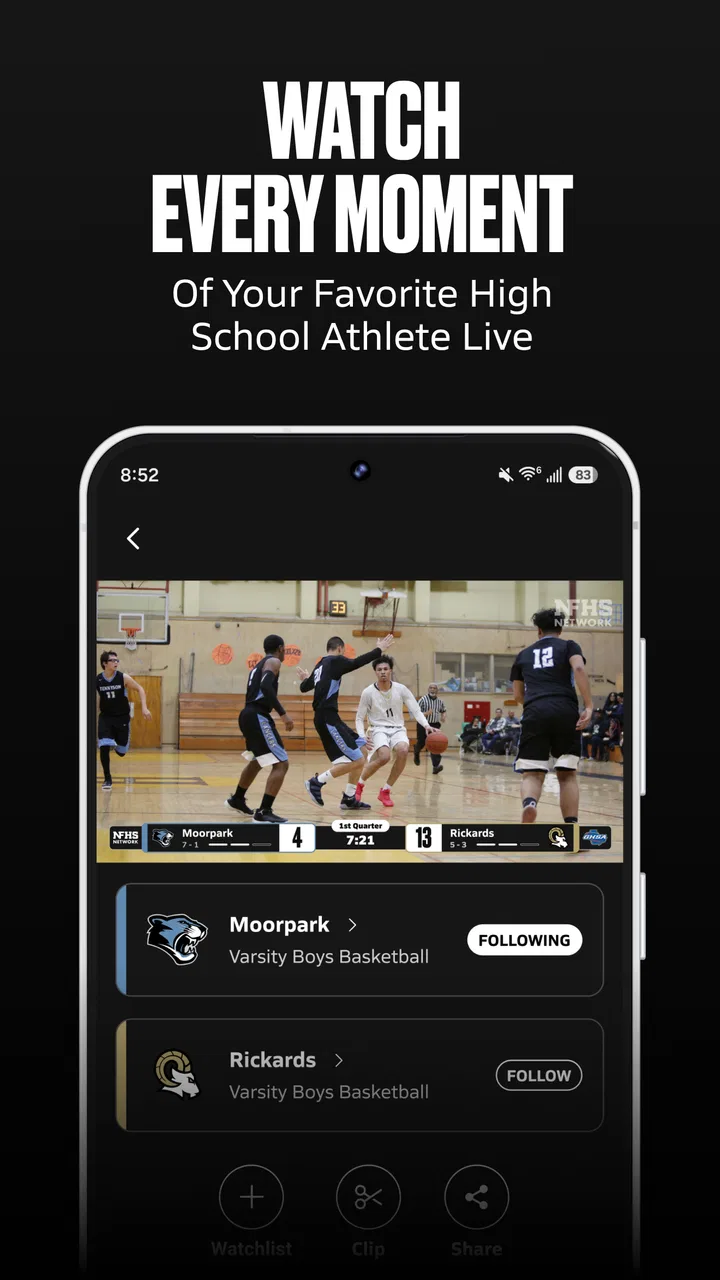
I approached NFHS Network as more than a place to watch a match. It is a sports app from NFHS Network focused on high school events across the country, and its real value depends on how easily different people can find, follow, and enjoy those events. A parent checking a school game, a student following a team from home, and a fan who cannot attend in person may all use it differently. In my experience, that makes the app worth judging not only by its video purpose, but also by how comfortable it is in everyday situations.
The app is free to install and is rated for Everyone, which gives it a broad starting point. It has reached over 500 thousand installs and holds an average rating of 4.0 from around 8 thousand ratings, so there is a sizeable audience behind it. That does not guarantee that every event or device experience will feel identical, but it does suggest that NFHS Network has become a familiar option for following school sports digitally.
How clearly the app works for different viewers
When I judge NFHS Network for different viewers, I focus on whether its event-centered approach makes the right game easy to reach without asking people to browse aimlessly. I’ll also consider how the choice of phone, tablet, or shared screen changes the experience, since a good viewing setup can matter as much as finding the broadcast.
You May Also Like

 Blood Strike: 2.5 Anniversary
Blood Strike’s Loadouts Turn Every Drop Into a Tactical Gamble
A close look at Blood Strike’s custom loadouts: how fast access to signature weapons reshapes its battle royale rhythm, rewards preparation, and narrows the gap between fights.

 Pandora - Music & Podcasts
Pandora’s Music Is Easy to Start, but Harder to Recover
Pandora’s strength is its low-effort path from a seed to a station. Its weak spot is how much confidence it asks you to place in connection, setup, and quiet recovery.

 8 Ball Pool
 Is Built on Rivalries, Rematches, and Routine
A close look at the rivalries, rematches, shared routines, and unanswered safety questions that turn a quick pool match into a persistent mobile community.

 Samsung Music
’s Quiet Strength Is Playing What You Already Own
Its reach comes less from spectacle than from dependable access to a personal library. That simplicity is both the app’s strongest retention engine and its ceiling.

 AccuWeather: Weather Radar
AccuWeather Review: A Quick, Clear Forecast for Everyday Decisions
For everyday plans, the best forecast is the one you can understand quickly. AccuWeather makes rain timing, radar, and local conditions easy to act on, with a few trade-offs.

 Hill Climb Racing
Why Hill Climb Racing Still Turns Crashes Into One More Run
A tiny car, a bumpy hill and one more upgrade: Hill Climb Racing keeps resurfacing because its simple chaos makes every near-miss feel personal.
More From Our News Desk



Readability and navigation come before the live action
The first thing I value in a sports streaming app is not visual decoration; it is the speed of getting from opening the app to the event I actually want. NFHS Network makes the most sense when I already know the school, team, or competition I am looking for. That focused approach is useful for families and local supporters because it keeps the purpose clear: find a high school event and watch it.
For someone who is less comfortable with mobile interfaces, the main challenge is usually not understanding what the app is for. The challenge is moving through event choices without losing track of where they are. A practical habit is to decide the exact school or sport before opening the app. That reduces unnecessary browsing and makes the experience less tiring for people who prefer a simple, predictable route.
I also recommend checking the event details before settling in to watch. Sports schedules can be affected by changes at the venue, and a viewer who opens the app expecting immediate action may become frustrated if the event is not presented exactly as expected. Taking a moment to confirm the matchup and start information is a small step, but it helps viewers who need extra time to prepare their viewing setup.
The interface is most approachable when the viewer treats it as a destination for a particular event rather than as an endless entertainment catalog. That distinction matters for older relatives, first-time users, and anyone who finds dense menus difficult to scan. I would introduce the app to a family member by showing one complete search-and-watch routine, then letting them repeat it. Familiarity is more useful here than a long explanation.
Text, contrast, and attention demands
Sports viewing naturally includes changing information: team names, event labels, playback controls, and the moving picture itself. For viewers with limited vision or attention, the best experience will come from reducing distractions around the screen. I would avoid watching with several demanding apps open at the same time and would use the device’s own display settings if text or controls feel uncomfortable.
NFHS Network is not a substitute for a dedicated accessibility tool, and I would not assume that every part of a broadcast is equally easy to interpret. A camera angle can change, on-screen information can be brief, and the important action may happen away from the center of the image. Viewers who rely strongly on visible detail should choose a larger screen when possible. A tablet or television display can make team movement and scoreboard information easier to follow than a small phone.
One useful trade-off is portability versus clarity. A phone is convenient at a school pickup, in a waiting room, or beside a sleeping child, but its smaller display asks more of the viewer. A larger screen is better for shared watching and for people who need visual information to be more prominent, although it is less flexible. I see this as a viewing decision rather than a flaw in the app itself.
For people who are sensitive to motion, rapid cuts, or loud sports environments, the surrounding setup matters. Lowering the device volume, using headphones that feel comfortable, or watching in a quieter room can make the stream easier to tolerate. These adjustments are especially helpful when the viewer wants to follow the game without being overwhelmed by the atmosphere of a busy venue.
Motor comfort and hands-free planning
Watching a full game is different from checking a short clip. A viewer with limited hand movement may not want to keep reaching for the phone to prevent the screen from changing or to recover controls. I found it more comfortable to place the device securely before the event begins and avoid holding it throughout the broadcast. A stand, nearby surface, or larger screen can reduce the need for repeated adjustments.
That preparation also helps parents who are caring for a child while following a game. If the phone is balanced awkwardly on a sofa or held in one hand, even a simple control can become inconvenient. Setting up the viewing position first creates a calmer experience and leaves the viewer’s hands available for other tasks.
The app is a better fit for people who want to watch at their own pace than for someone who needs constant physical interaction. Once an event is playing, the viewer can concentrate on the action instead of navigating continuously. Still, I would not plan an important viewing session around the assumption that no interaction will be needed. Devices can lock, connections can change, and a viewer may need to adjust playback or return to the event screen.
For users with motor difficulties, the most realistic approach is to combine the app with the accessibility controls already available on the phone or tablet. Enlarged touch targets, voice control, switch access, or other system-level options may help, but their usefulness depends on the device and the person. NFHS Network benefits from that support, yet the app should not be treated as if it independently solves every motor-access challenge.
Following a game in imperfect situations
One of the strongest everyday uses is staying connected when attending the venue is not practical. Imagine a parent working late who cannot reach the school gym, or a grandparent living far away who wants to see a student compete. The app gives that person a way to participate from a different place, which can be emotionally important even when the viewing setup is modest.
It is also useful when several people in a household want different kinds of access. One person may watch the full event, while another checks in briefly between chores or uses a smaller screen in another room. This flexibility is more valuable than it sounds because high school events rarely fit neatly into everyone’s schedule.
For a viewer with hearing loss, visual access to the game becomes particularly important, but the quality of that experience depends on how much information is conveyed through the picture. The action itself may be understandable visually, while spoken commentary or announcements may be less useful. I would treat the broadcast as a way to see the event, not automatically as a complete substitute for every form of live communication at the venue.
For a viewer with limited vision, the opposite trade-off appears. Audio can help communicate the rhythm of play and the excitement of the moment, but audio alone may not provide enough detail about player positions, penalties, or the scoreboard. If a trusted person is watching too, shared viewing can help: one person follows the visual details and explains key moments naturally. That is not a built-in app feature, but it is a practical way to make remote viewing more inclusive.
People who are sensitive to noise may prefer watching without commentary or with the volume kept low, while fans who depend on commentary may need stronger audio. This is where personal setup matters more than a single universal recommendation. I would test the sound before the event begins instead of waiting until an important play is underway.
Where the experience still asks too much
The biggest limitation is that video access does not automatically equal fully accessible sports access. A viewer may be able to open the app and start an event but still struggle with small controls, fast visual changes, unclear event selection, or information delivered in only one format. Those are separate layers of usability, and NFHS Network should be evaluated with all of them in mind.
Another barrier is the dependence on a suitable viewing environment. A weak connection, a crowded room, glare on a screen, or limited battery can make a live event difficult to enjoy. These problems are not unique to this app, but they matter more when the viewer cannot simply pause the real-world game and try again. I would prepare the device, charger, and viewing position before the event rather than treating setup as an afterthought.
The free installation is helpful, but viewers should pay attention to the financial side of particular content. In-app purchases range from $9.99 to $79.99 per item. That means “free” describes getting the app, not necessarily every viewing choice inside it. Before committing to a purchase, I would make sure the selected event is the one I want and confirm the cost shown at the point of purchase. This is especially important when a family member is using a shared device or account.
That pricing structure may also affect inclusion. A viewer who only wants occasional access may find a single purchase difficult to justify, while a family that follows several events could see more value in regular use. I would not recommend spending automatically just because an event is important; first consider whether a school, family member, or another legitimate viewing option already provides the access needed.
The app’s age rating of Everyone makes it suitable as a general family-oriented sports app, but that label does not describe the comfort of every viewing situation. Children may need help choosing events and understanding purchases. Older adults may appreciate a short demonstration. People with disabilities may need device-level adjustments or assistance from someone nearby. Inclusive use often depends on the support around the app as much as the app itself.
Updates, device expectations, and practical preparation
The current version is 2.16.3, and the minimum operating system is Android 7.0. That gives the app a relatively broad reach among Android devices, including some older phones and tablets. Even so, operating-system compatibility is only the starting point. A device that can install the app may still offer a less comfortable experience if its screen is small, its battery is worn, or its performance is limited.
I would update the app before an important event rather than waiting until the last minute. That is not because every update changes the way the app works, but because live viewing is a poor time to discover that the installed version needs attention. I would also open the app in the same location where I plan to watch, especially if the event matters to the family.
Android users with older hardware should think about what they need most. If portability is essential, a phone may be enough for quick checks and short viewing periods. If the goal is to follow an entire game, a larger, newer device may be the better investment even when the app itself runs on older software. In my view, screen comfort and reliable performance influence accessibility just as much as installation support.
NFHS Network is developed by NFHS Network, and its identity is closely tied to high school sports rather than general video entertainment. That focus is a strength for viewers who already know what they want to watch. It is less compelling for someone looking for professional leagues, broad on-demand entertainment, or a social platform built around constant conversation.
Who should choose it, and who should look elsewhere?
I would recommend this app to families with a direct connection to a high school team, relatives who live away from the venue, and supporters who need a practical way to follow school sports remotely. It is also a sensible choice for someone who values access to events from across the country instead of relying only on what is happening nearby.
I would be more cautious about recommending it to a viewer who expects every event to be easy to discover without preparation, or who needs highly detailed accessibility information before deciding. The app can provide a route to the game, but the quality of the overall experience depends on the device, the broadcast, the connection, and the viewer’s own needs.
Compared with attending in person, the app loses the atmosphere, the shared crowd reaction, and the ability to see everything from a chosen seat. Compared with general video platforms, it is more relevant when the content is a specific school event, but less useful for casual browsing. Compared with social media updates, it can offer a more meaningful way to follow the action, though a short score update may be quicker when time is limited.
That comparison helped me understand its proper role. NFHS Network is not trying to replace every sports habit. It works best as a bridge between the event and people who cannot be there, particularly when the viewer has a personal reason to care about the teams involved.
My inclusive verdict
After using it with accessibility and context in mind, I see NFHS Network as a useful, focused sports app with a clear purpose and some important practical limits. Its free entry, Everyone rating, support for Android versions from 7.0 onward, and broad high school coverage make it approachable for many households. The average rating of 4.0 from around 8 thousand ratings reflects a generally positive reception, while the roughly 1.7 thousand written reviews show that many users have taken the time to describe their experiences.
My main advice is to treat the viewing setup as part of the app experience. Choose the right screen, prepare the device, check the event carefully, and consider how sound, text, movement, and physical interaction affect the person watching. Those steps can make the difference between a frustrating stream and a genuinely valuable connection to a school event.
I would choose it when the event matters and remote access is the priority. I would skip it when I only want broad sports entertainment, when a quick score is enough, or when the purchase terms do not fit the way I plan to watch. For viewers with specific accessibility needs, I would test the navigation and presentation during a less important event first. That honest trial is more useful than assuming that a general sports app will suit every person equally well.
Overall, NFHS Network earns my recommendation for the audience it serves: people who want to stay close to high school sports when distance, schedules, mobility, or other circumstances keep them away from the venue. It is not a complete answer to every accessibility challenge, but with thoughtful preparation and realistic expectations, it can turn a missed game into an event that families and supporters can still share.
FAQs for NFHS Network
01What is NFHS Network and what content does it offer?
NFHS Network is a streaming service dedicated to high school sports and extracurricular activities across the United States. It offers live and on-demand coverage of various sports events, such as football, basketball, and more. Additionally, it features coverage of other school activities like graduations and performances, providing a comprehensive platform for community events.
02How can I access the content on NFHS Network?
To access content on the NFHS Network, users need to download the app from the Google Play Store or Apple App Store and create an account. Some content may require a subscription, which allows you to stream live events and access on-demand videos. Free content may also be available, depending on the event.
03Is there a subscription fee to use NFHS Network?
Yes, NFHS Network typically requires a subscription to access its full range of content. Subscription plans may vary, offering monthly or annual options. Prices can differ based on the type of access you choose, such as live events or on-demand content. Check their website or app for the latest pricing details.
04Can I stream NFHS Network on multiple devices?
Yes, NFHS Network supports streaming on multiple devices, including smartphones, tablets, and computers. However, to use it on multiple devices simultaneously, you may need to ensure your subscription plan supports multiple streams. Check the app’s terms for specific details about device compatibility and simultaneous streaming.
05What should I do if I encounter streaming issues on NFHS Network?
If you experience streaming issues on NFHS Network, try troubleshooting by checking your internet connection, restarting the app, or updating it to the latest version. If problems persist, visit the NFHS Network support page for assistance or contact their customer service. They offer resources and support to resolve technical issues.
Pros
- High-quality streaming of live games.
- Extensive archive of past events.
- User-friendly interface design.
- Wide range of sports coverage.
- Compatible with multiple devices.
Cons
- Subscription required for full access.
- Occasional buffering issues.
- Limited offline viewing options.
- No ad-free option available.
- Geographic restrictions on some content.

NFHS Network
Gallery